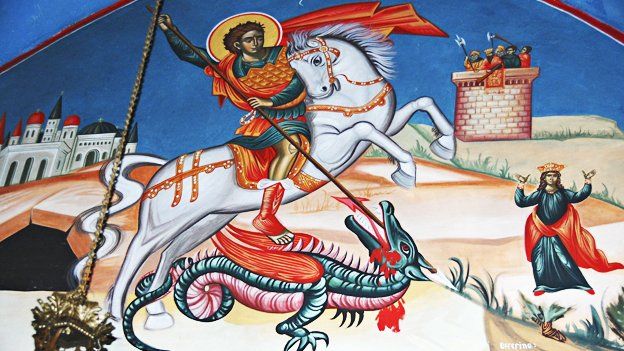
You know Saint George. Everyone does. He’s the dragon-slayer, the knight in shining armor, the guy on the English flag who shows up at parades and pub signs. But here’s the real question: why is a Roman soldier from Palestine the patron saint of jolly old England? It’s a story less about historical fact and more about a brilliant piece of medieval branding.
The short answer? Edward III made it official, but the legend was already on fire. By the 14th century, George was the ultimate symbol of chivalry, courage, and Christian virtue. The Order of the Garter, England’s highest honor, was dedicated to him in 1348, cementing his status as the nation’s spiritual mascot. It was a smart move—George was a known quantity across Europe, a unifying figure with zero political baggage.
Before that, the country had been loyal to Edward the Confessor, a local king. But swapping a homegrown monarch for a dragon-fighting superhero? That’s pure genius. George wasn’t tied to any English dynasty, so everyone could get behind him, from the king to the peasant. He was also the patron saint of soldiers, which made him perfect for a country obsessed with—and constantly fighting in—the Hundred Years’ War. It was like hiring a celebrity spokesperson who never aged.
Must Read
The Dragon: A Metaphor for Life
Let’s talk about the famous dragon story, because it’s not just a fairy tale. According to the Golden Legend, a medieval bestseller, George saved a princess from a dragon by making the sign of the cross and striking it down. The twist? He didn’t just slay the beast; he converted an entire town to Christianity afterward. It’s a tale of faith, courage, and knowing when to ask for a better deal.
Historians believe the story is symbolic. The dragon often represents evil, paganism, or even the devil. George, the perfect knight, stands for the triumph of good over chaos. That’s a message that resonated deeply in a medieval England full of plagues, wars, and political upheaval. When things got rough, people needed a hero who could face a monster—and win.
And here’s a fun little fact: the dragon wasn’t always part of the deal. Early versions of the George legend were simpler—just a martyr dying for his faith. The dragon was added in the 6th century, possibly borrowed from earlier myths like Perseus and Andromeda. The English loved it so much they made it the poster child for their identity. Boom—instant folklore upgrade.
How He Became "The English Saint"
The turning point came in 1191, during the Third Crusade. English soldiers fighting at the Siege of Acre claimed Saint George appeared before them in a vision, rallying their charge. This wasn’t just a prayer—it was a manifesto. The story spread like wildfire, and George’s red cross became the emblem of the English army. Suddenly, he was more than a saint; he was a battle buddy.
 Why is Saint George the Patron Saint of England? | The Irish Sun
Richard the Lionheart, the crusader king, gave the saint a major boost. He placed the English forces under George’s protection, and the red cross on a white field officially became the national flag. It’s worth noting that Richard himself was more of a mercenary than a saint, but he knew a winning symbol when he saw one. Talk about a PR masterstroke.
By the 16th century, Henry VIII toned down the saintly cult (he had his own reasons), but George kept the job. The Reformation tried to demote him—Protestants weren’t big on saints—but the people refused to let him go. He was too deeply woven into England’s identity, from Morris dances to Shakespeare’s plays. In Henry V, the king shouts, “Cry God for Harry, England, and Saint George!” It’s still the line that gets a crowd cheering.
Cultural References You Didn't Know You Absorbed
Saint George is everywhere in modern England, even when you don’t notice. That red cross on the Union Jack? That’s his flag. The name George became so royal that six British kings used it. The iconic George Cross, awarded for civilian bravery, honors him directly. And every time you see a knight in a movie, from Monty Python to Game of Thrones, you’re looking at his shadow.
But the most surprising fact? Saint George is also the patron saint of Portugal, Catalonia, and Georgia. England didn’t invent him; they just adopted him better than anyone else. In Catalonia, Saint George’s Day is like Valentine’s Day, where men give women roses and women give men books. In England, we eat roast beef and watch parades. The diversity is part of his charm.
Practical Tips: Living Like a Modern Saint George
You don’t need a horse or a lance to channel the spirit of Saint George. Start by slaying your own dragons. That might be a difficult conversation, a messy inbox, or a fitness goal you’ve been avoiding. Courage is the core of his legend—so pick one fear this week and confront it, even if it’s just saying “no” to an extra meeting. The dragon doesn’t have to be literal; it’s whatever holds you back.
 Why is St George the patron saint of England - History behind the
Another tip: practice symbolic generosity. George converted a city by showing mercy, not just killing. In daily life, that can mean small acts of kindness: buying coffee for a stranger, listening without interrupting, or donating to a cause you care about. The “knight” part is about protection, not aggression. Think of yourself as the guardian of your own little world.
Finally, fly your flag. Saint George’s cross is a simple, bold symbol. Wear a pin, put a sticker on your laptop, or just remember it when you feel small. Identity matters—belonging to a story that values bravery and honor can give you a mental boost. It’s not about nationalism; it’s about connecting to a shared ideal of the good fight.
And yes, you can celebrate his feast day, April 23rd. That’s also Shakespeare’s birthday and World Book Day in some countries. Read a book, write a poem, or just raise a glass of mead (or tea) to the dragon-slayer. It’s a cultural moment you can own without any armor required.
Reflection: The Knight Within
Saint George matters because he shows us that heroes don’t have to be perfect. His story is full of contradictions—a foreign saint for a local identity, a warrior who converted through compassion, a legend built on shaky facts but solid meaning. In a world that often feels chaotic, we all need a symbol of clarity and courage. The dragon might be a metaphor for our own fears, but George reminds us that you don’t have to be a saint to stand up to them.
So next time you see that red cross on a flag or a pub sign, take a moment. Ask yourself: What’s my dragon today? And then, with a nod to the old knight, go and face it. Not with a sword, but with patience, a steady heart, and a little bit of English stubbornness. The best tales aren’t about winning every battle—they’re about showing up for the fight. And that, dear reader, is something you can do right now.