
There’s a moment of pure, quiet magic in the kitchen when you drop a battered onion ring into hot oil. The sizzle, the bubbling foam, the way it rises to the surface like a golden dream—it feels almost alchemical. But here’s the secret that separates the crisp from the greasy: temperature is everything.
Think of deep fry oil as a temperamental artist, not a brute force. Get it too cold, and your food soaks up oil like a sponge, leaving you with a sad, heavy mess. Get it too hot, and you’ll burn the outside before the inside even thinks about cooking.
The sweet spot—the 350°F to 375°F (175°C to 190°C) range—is where the real living happens. Within this band, the oil creates an instant steam barrier around your food, keeping it crisp on the outside and tender on the inside.
Must Read
The Science of the Sizzle
When food hits the hot oil, water inside it vaporizes instantly, creating steam that pushes outward. This steam prevents the oil from seeping in, which is why a properly fried French fry is light, not oily. Temperature control is the difference between a triumph and a paper-towel disaster.
Fun fact: the first recorded recipe for deep frying dates back to ancient Rome, where they fried dough in oil for a treat called scriblita. They didn’t have thermometers, so they tossed a piece of bread into the oil—if it sizzled within 60 seconds, they knew it was ready.
You can do the same trick with a wooden chopstick or a grain of rice. If bubbles dance around it immediately, you’re in business. It’s a little primal, a little magical—and it works.
Your Everyday Toolkit
A clip-on thermometer is your best friend, but let’s be real—sometimes you lose it in a drawer. In a pinch, use a pinch of flour: if it sizzles and floats, you’re around 350°F. If it browns immediately, back off the heat.
Another pro tip: don’t crowd the fryer. Dropping too much food at once lowers the oil temperature drastically, and then you’re pan-frying instead of deep frying. Give each piece personal space, like a polite party guest.
And please, for the love of all things crunchy, never use extra-virgin olive oil for deep frying. Its smoke point is low, meaning it’ll burn and turn bitter before your fries even blush. Stick with peanut, canola, or avocado oil—they’re steady and loyal.
A Cultural Dip into Oil
Different cuisines treat oil temperature like a signature. Southern American cooks often fry chicken at 325°F to ensure the meat cooks through before the coating burns. Japanese tempura chefs keep oil even cooler—around 320°F—for a light, lace-like batter.
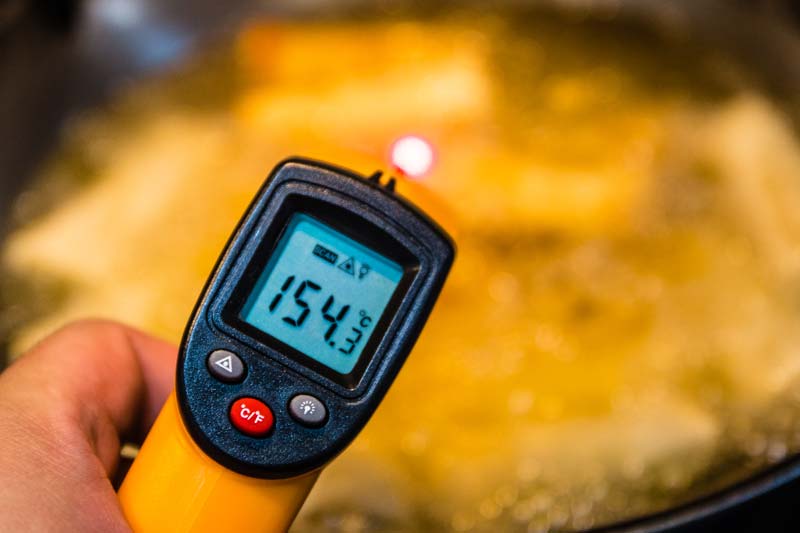 Deep Fryer Oil Temp
Fish and chips in the UK? They’ll crank it up to 375°F for that shatteringly crisp exterior. And in Korea, twigim (fried snacks) are done at a moderate 350°F for a deep, golden hue that’s as beautiful as it is delicious.
Here’s a wild thought: the best fried food you’ve ever eaten was likely at exactly 365°F. That’s the temperature where the Maillard reaction—the browning process that creates flavor—peaks. It’s not random; it’s chemistry that tastes like joy.
Small Adjustments, Big Wins
If you’re frying something dense, like chicken or potatoes, start a little lower (350°F) to let the inside cook. For delicate foods like fish or zucchini flowers, go a notch higher (370°F) for a quick flash-fry that doesn’t dry them out.
Use a spider strainer, not tongs—tongs can tear a delicate batter. And always, always let the oil return to temperature between batches. Patience here is the cheapest ingredient you’ve got.
One more thing: salt immediately after frying. Those hot, fresh surfaces are hungry for seasoning, and the salt will stick like a memory. Wait too long, and it just slides off.
The Unexpected Calm
There’s a quiet, meditative rhythm to watching a thermometer needle hover in the right zone. It’s a small act of control in a world that often feels messy. You’re not just cooking—you’re aligning molecules for someone’s happiness.
Fun fact: professional fry cooks sometimes tap the side of the fryer basket rhythmically to gauge temperature by sound. A low hum means cool oil; a sharp crackle means you’re ready. It’s like drumming for dinner.
 Deep Fryer Oil Temp
And yes, a splash of oil on your forearm is a rite of passage. Keep a wet paper towel in the freezer for quick relief—it’s a life hack that feels like a secret handshake.
The Perfect Flip
You’ll know you’ve nailed it when the food rises to the surface on its own, golden and proud. That’s the oil telling you, “I’m done with you, go be delicious.” Pull it out, let it drain on a rack (not paper towels—they trap steam and soften the crust).
Serve it fast. Fried food waits for no one. In thirty seconds, that perfect crunch begins to fade, like a good photograph that only exists in one moment.
But here’s the beautiful part: you made that moment. With a thermometer, a pot of oil, and a little attention to a number between 350 and 375, you turned raw ingredients into something people remember.
A Final, Golden Reflection
We spend so much of our lives rushing—through work, through conversations, through the drive home. But deep frying demands a different pace. It asks you to wait, to watch, to resist the urge to crank up the heat for speed.
That small patience—that single degree of restraint—is a micro-lesson in how we approach everything. Not with a blast of heat, but with steady, intentional warmth. Because the best things in life, from friendships to perfectly crispy onion rings, aren’t forced.
They’re held at just the right temperature, until they rise, golden and ready, all on their own.
So next time you fire up that pot of oil, take a breath. Check the temp. And know that you’re not just making dinner—you’re practicing a tiny, delicious form of mindfulness. The world can wait. The bubbles are telling you exactly what to do.