
Let’s be real for a second. You’ve probably stood over a steaming pot of broccoli, wondering if you’re gently coaxing out its goodness or accidentally flushing it down the drain. The internet has a lot of opinions, but the truth is far more chill than the doom-scrolling suggests.
Here’s the headline: Yes, some nutrients are lost, but the story is less about loss and more about balance. Think of your veggies as a bank account. Boiling is like a cash withdrawal—water-soluble vitamins like vitamin C and some B vitamins happily dissolve into the cooking liquid. Steaming, on the other hand, is more like using a debit card—you’re still spending, but you keep a much better record of where everything went.
Heat is the real culprit, not the steam itself. Any cooking method that applies heat will degrade heat-sensitive nutrients like vitamin C and folate. But here’s the fun part: steaming is actually one of the gentlest ways to do it. Because you’re not submerging the veggies, you keep far more of the water-soluble stuff locked inside the plant cells.
Must Read
The Magic of the Steam Basket
Think of your kitchen steamer as a cozy spa for vegetables. It uses moist heat without the harsh turbulence of boiling water, which leaches nutrients into the pot. Studies show that steaming preserves up to 90% of antioxidants like carotenoids and flavonoids, compared to boiling which can flush out 60–70%.
But wait—here’s a twist. Some nutrients actually become more available after steaming. Lycopene in tomatoes and beta-carotene in carrots get a boost when heated, because the heat breaks down cell walls, making these fat-soluble compounds easier for your body to absorb. So yes, you are losing a bit of vitamin C, but you’re gaining a superhighway to lycopene—a trade-off that’s totally worth it.
A fun little fact: a 2009 study in the Journal of Food Science found that steaming broccoli actually increased its glucosinolate content—those compounds linked to cancer prevention—while boiling slashed it. So don’t panic about the vitamin C; your immune system will thank you for the antioxidant punch.
How to Steal the Show (and the Nutrients)
Want to be a nutrient-saving ninja? Keep your steaming time under 10 minutes. Overcooking breaks down delicate vitamins and turns your bright green beans into sad, gray soldiers. A good rule is to steam until the veg is just tender enough to pierce with a fork—like al dente pasta, but greener.
Also, don’t be afraid to get a little creative. Try steaming with a splash of broth or coconut water instead of plain H₂O. Those flavorful liquids will capture any escaping nutrients, and you can use them as a sauce base. It’s like a two-for-one deal: you get the health and the flavor.
And while we’re at it, don’t toss the leftover steaming liquid. That water is now a golden elixir of water-soluble vitamins. Use it to cook rice, water your plants (plants love a B-vitamin boost), or sip it as a mild, earthy tea. Yes, it sounds a bit granola, but your body will thank you.
Cultural Roots of the Steam
Steaming isn’t some trendy wellness hack—it’s ancient. In Chinese cuisine, dim sum and delicate gai lan (Chinese broccoli) have been steamed for centuries, preserving both texture and nutritional integrity. Mexican households use steam to cook nopales (cactus paddles) and tamales, locking in the earthy flavors without drowning them.
Even in traditional French cooking, steaming—or à la vapeur—is a classic way to prepare delicate vegetables for a jardinière garnish. The French, who know a thing or two about pleasure, steam asparagus for exactly four minutes and call it perfection. You don’t mess with tradition.
The modern twist? Microwave steaming. A 2016 study from the University of California, Davis, found that microwaving vegetables with a small amount of water actually retained more vitamin C than boiling or pan-frying. So if you’re in a rush, throw your broccoli in a glass dish with a tablespoon of water, cover it, and zap for 2–3 minutes. It’s basically the quarter-life crisis of cooking methods—fast, efficient, and surprisingly effective.
The Great Nutrient Trade-Off
Let’s talk about the elephant in the steamer basket: raw vs. cooked. Raw food enthusiasts swear by uncooked veggies for maximum enzymes. But here’s the reality: human bodies don’t actually need plant enzymes—our own digestive system handles that. What we do need is easy access to nutrients, and steaming unlocks those.
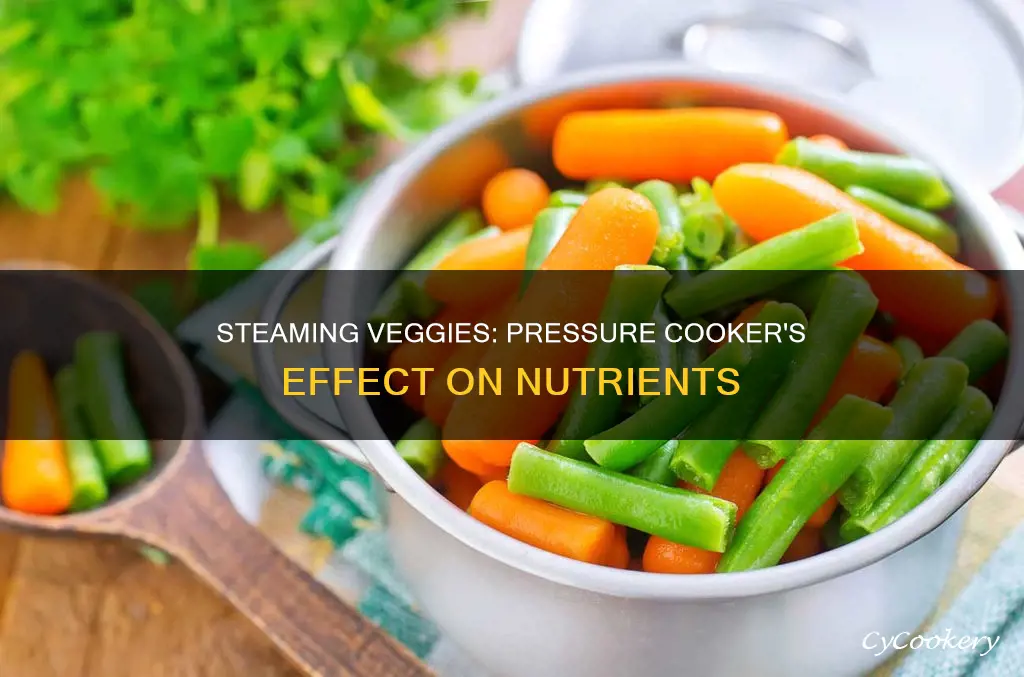 Steaming Veggies: Pressure Cooker's Effect On Nutrients | CyCookery
For example, raw spinach is full of oxalic acid, which can block iron and calcium absorption. Steam it for three minutes, and that oxalic acid drops significantly, making those minerals way more available. So the person who eats a giant raw kale salad might be missing out on the very iron they think they’re getting.
$Your gut is the final boss. If you have a sensitive digestive system, steamed vegetables are your best friend. The gentle heat breaks down fibers, making them easier to digest and reducing bloating. It’s like giving your gut a soft hug.
Practical Tips for the Everyday Steamer
Here’s your cheat sheet. First, cut your veggies into uniform sizes so they steam evenly. Chop a broccoli floret larger than a carrot stick, and you’ll end up with half raw, half mush. Second, don’t overcrowd the basket—steam needs room to circulate, like people at a party.
Third, season after steaming. Salt draws out moisture, which can leach nutrients before the heat even hits. A sprinkle of sea salt, a squeeze of lemon (hello, vitamin C boost), and a drizzle of olive oil (for fat-soluble nutrient absorption) after steaming is the chef’s kiss.
Finally, steam with a lid on. It might sound obvious, but every time you lift that lid, you release steam and slow down the process. Be patient—your veggies are worth the wait.
A Quick Reality Check
Let’s face it: the difference between steaming and other cooking methods is marginal in the context of your whole diet. If you steam your broccoli for 8 minutes instead of 4, you lose maybe 10% of its vitamin C. But if you don’t eat broccoli at all, you lose 100% of its benefits.
The real enemy is not cooking it in the first place. Or, even worse, boiling it into a lifeless mush and then dumping the water down the sink—that’s where the real nutrient jailbreak happens. So relax. You’re doing great.
And here’s a secret: frozen vegetables are often steamed before freezing, which locks in nutrients at their peak. That bag of frozen peas in your freezer? It might have more vitamin C than the fresh peas that sat on a truck for three days. So don’t be a food snob—frozen is your ally.
Reflection: The Gentle Art of Letting Go
In daily life, we often worry about perfection—the perfect meal, the perfect nutrient ratio, the perfect version of ourselves. But the truth is, life is a series of small trades. You trade a tiny bit of vitamin C for a massive increase in antioxidant availability. You trade raw crunch for easier digestion. You trade time for nourishment.
Steaming is a metaphor for being gentle with yourself. It’s about finding the middle path—not boiling over with stress, not staying raw and untouchable, but allowing a little warmth to make things more digestible. You don’t need to be a raw-food purist or a boil-it-to-death traditionalist. You just need to show up, put the lid on, and let the steam do its quiet, transformative work.
So tonight, steam those carrots. Eat them with a little butter and salt. Know that you’ve done something simple, ancient, and kind. And then move on with your beautiful, imperfect life.